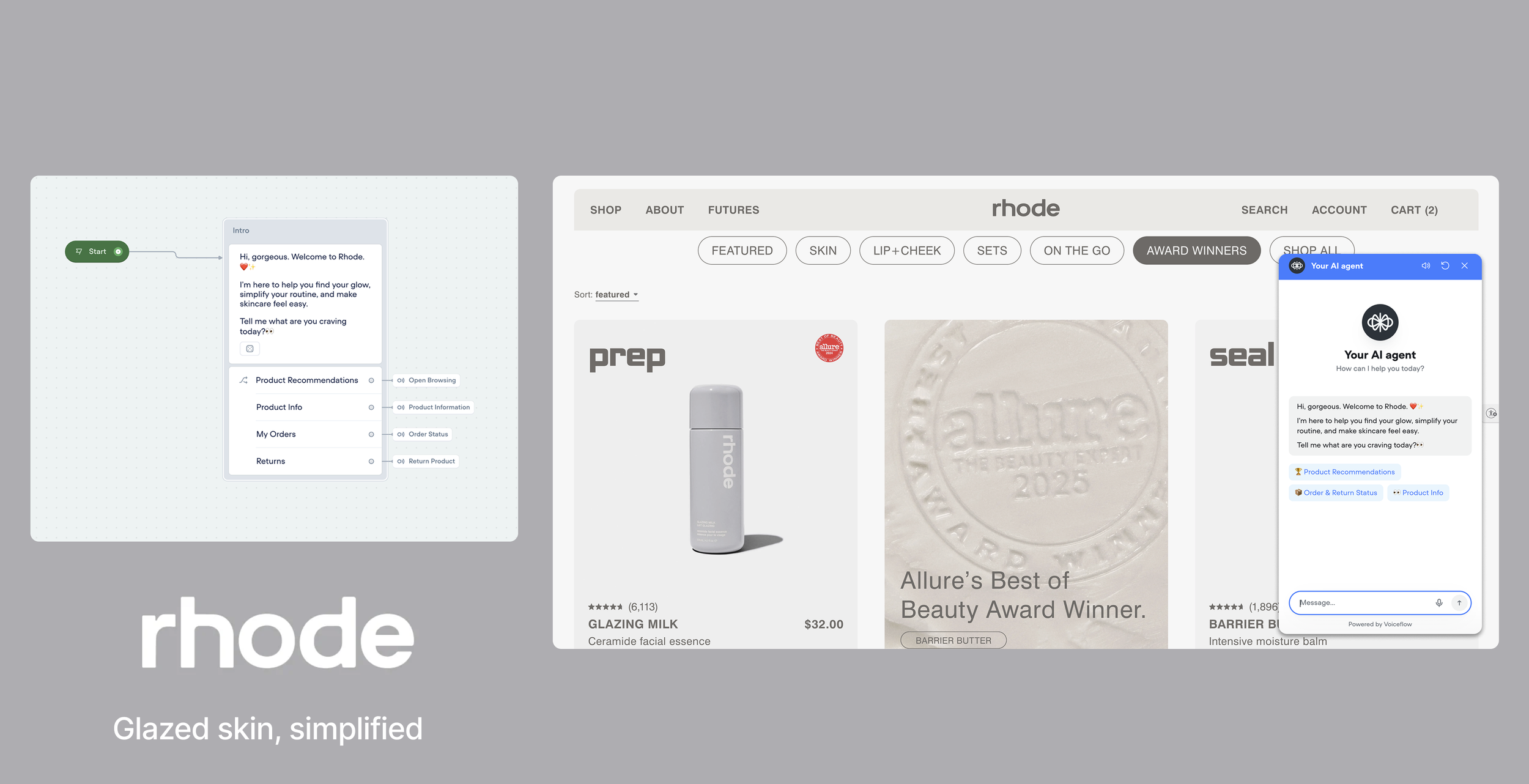
rhode: Your glow, guided by a chat agent ✨
Your skincare journey, elevated through a chat agent that guides you to your perfect glow. Meet Rho, your personal glow guide 💄
Main Accomplishment:
Conversational UX Designer with a team of 2 other designers
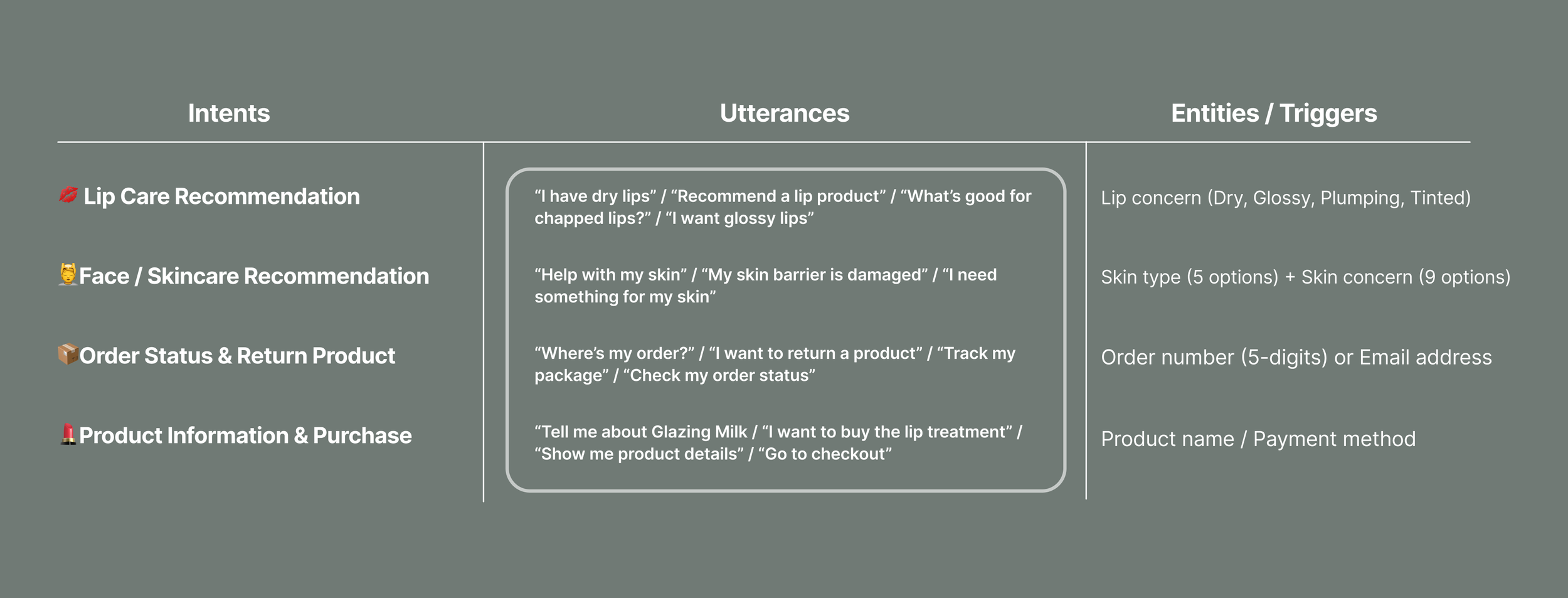
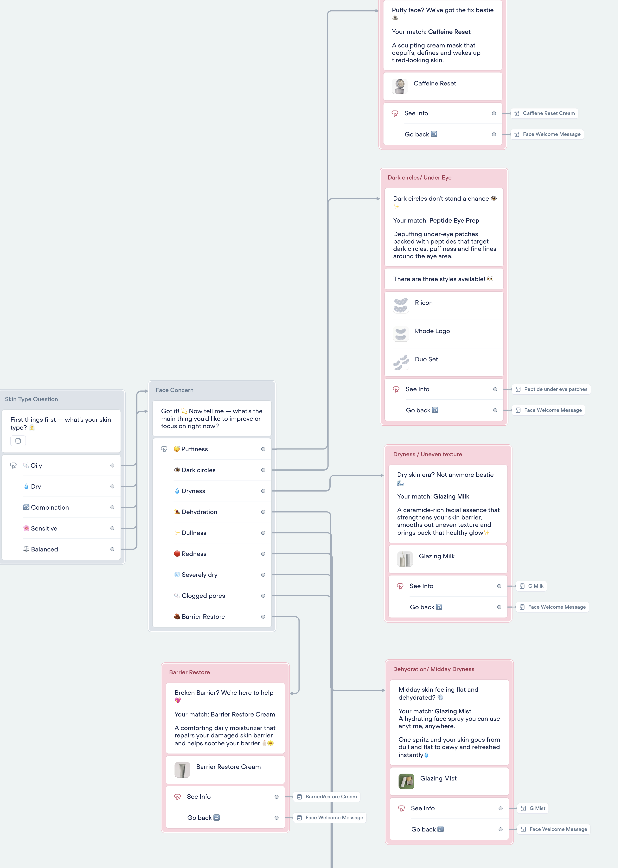
Built 5 key intents and 2 non-intents focused on guiding user interactions, using utterances, entities, and triggers to support natural conversation flows.
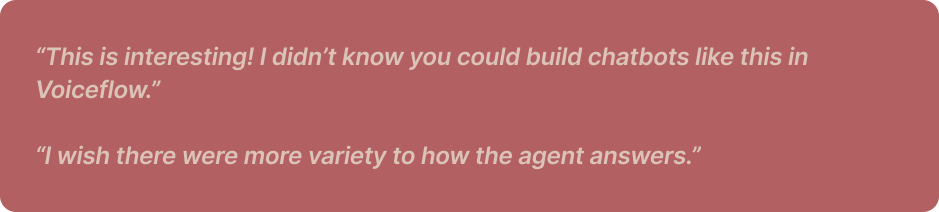
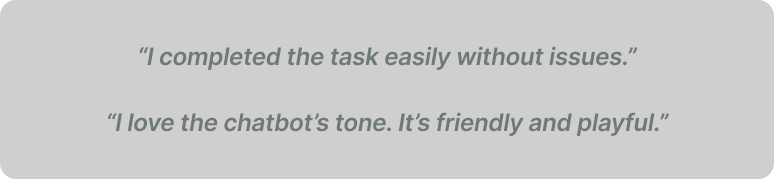
2 of 3 users described the experience as easy to use, reflecting positive user feedback.
Project Summary:
Timline: Feburary - April 2026 (8 weeks)
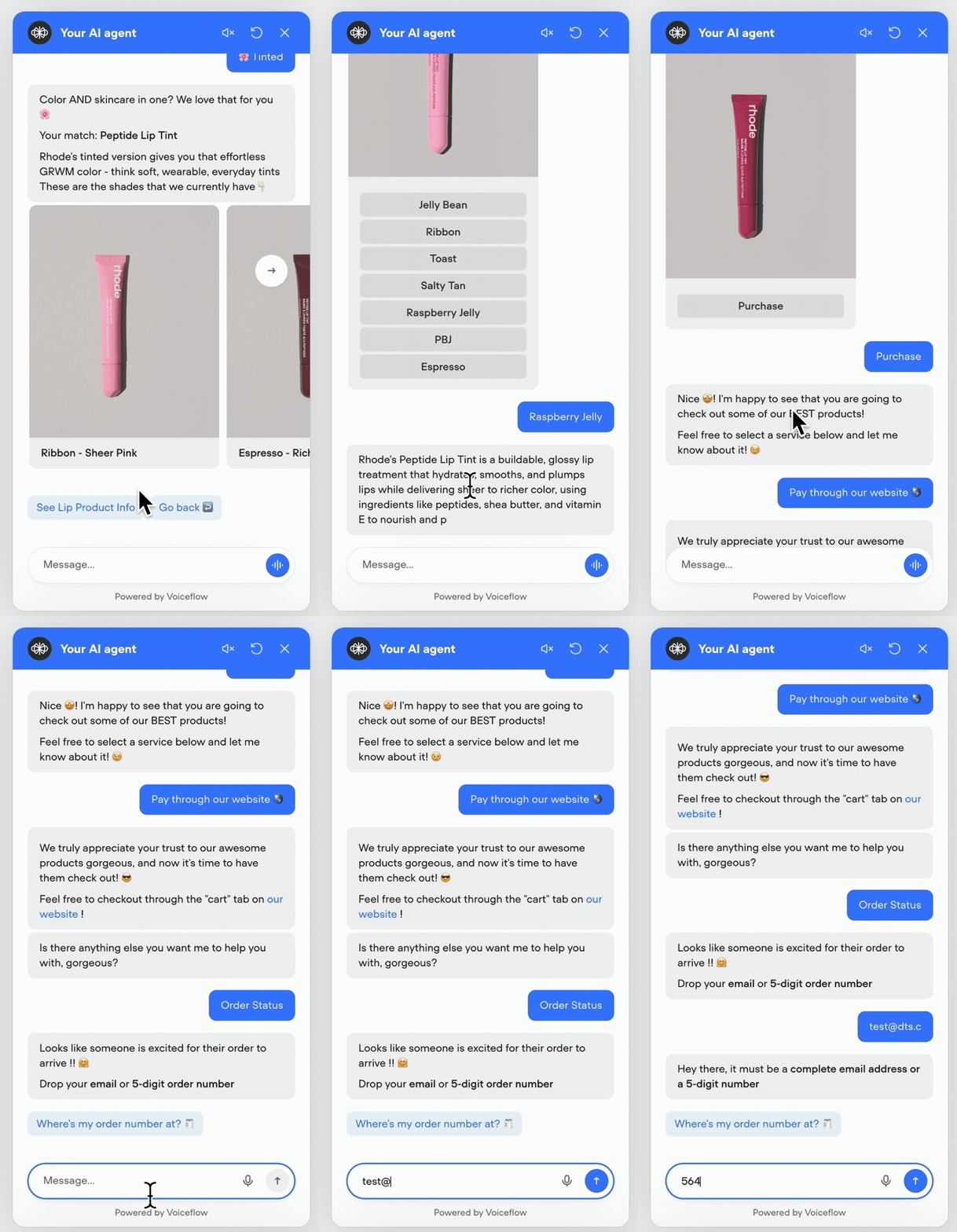
Deliverables: Built a Voiceflow chatbot from introduction to key intents and closure flows.
Tools: Voiceflow, Figma, Figma Slides
Target Device: Desktop agent
What is Voiceflow? 💻
Voiceflow is a design platform for creating and prototyping conversational user experiences.
We focused on choosing Rhode — a cosmetic brand launched by Hailey Beiber— because it is a brand that is widely known around the world, but while looking into the website, we found that they did not have a service agent. We first went through the Rhode website to identify a few possible task flows that users could take when interacting with a chat-based service agent.
After exploring different user intentions across the website, we decided to focus on three main areas that we felt users would interact with the most:
Product Recommendation 🧴
Product Information and Purchase 🛒
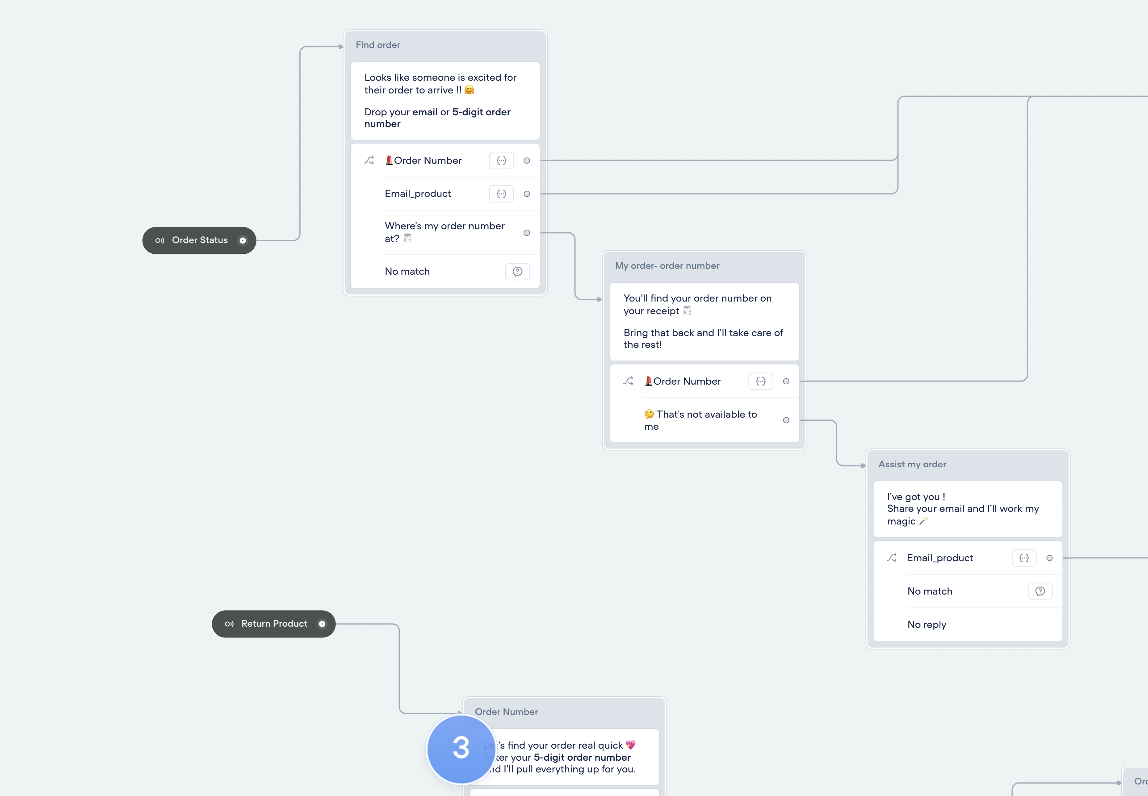
Order Status and Returning Product 📦
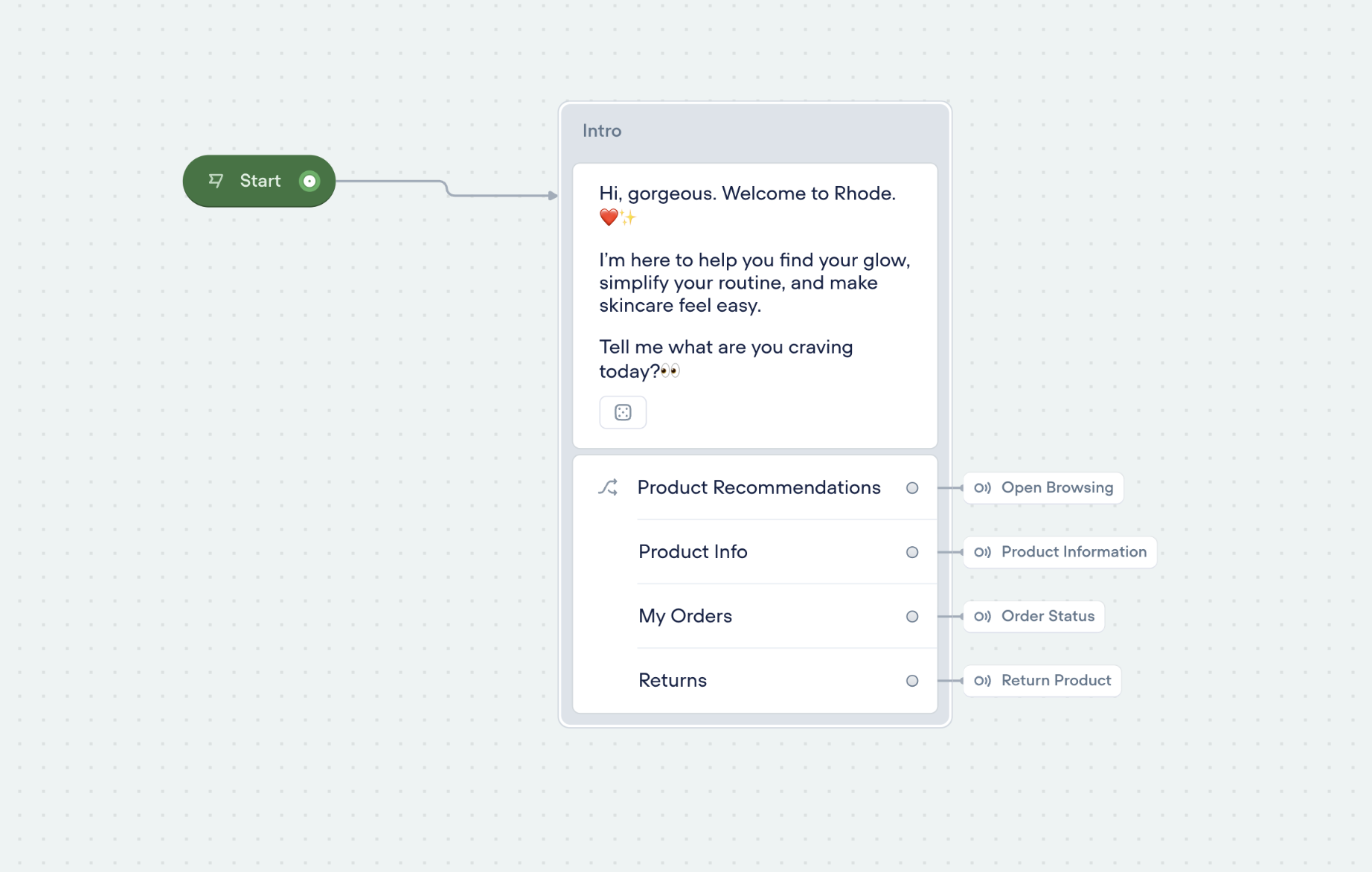
Introduction Flow
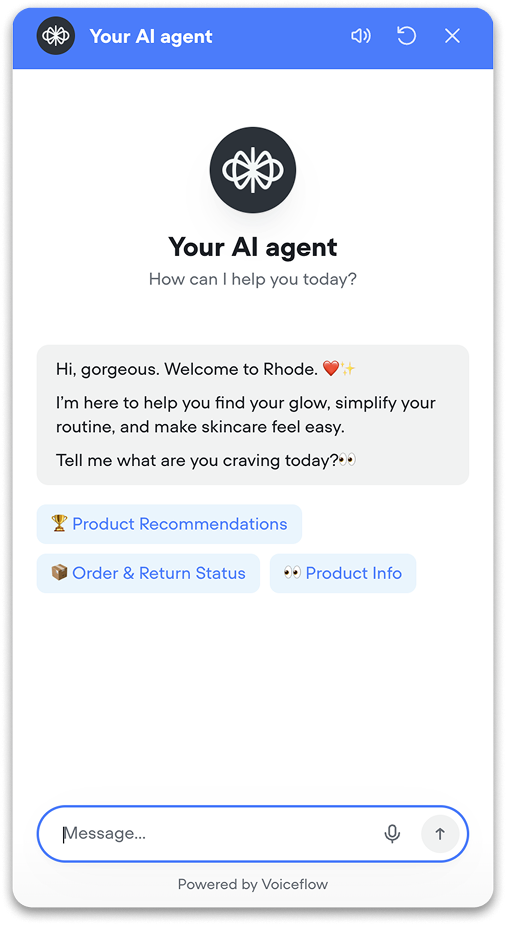
Chat Agent Prototype
What is an intent? 🥅
Intents in conversation refer to the purpose, goal, or objective behind a user's input, which AI systems (like chatbots) identify to provide relevant responses
What is an utterance? 🗣️
a spoken word, statement, or vocal sound to make a statement

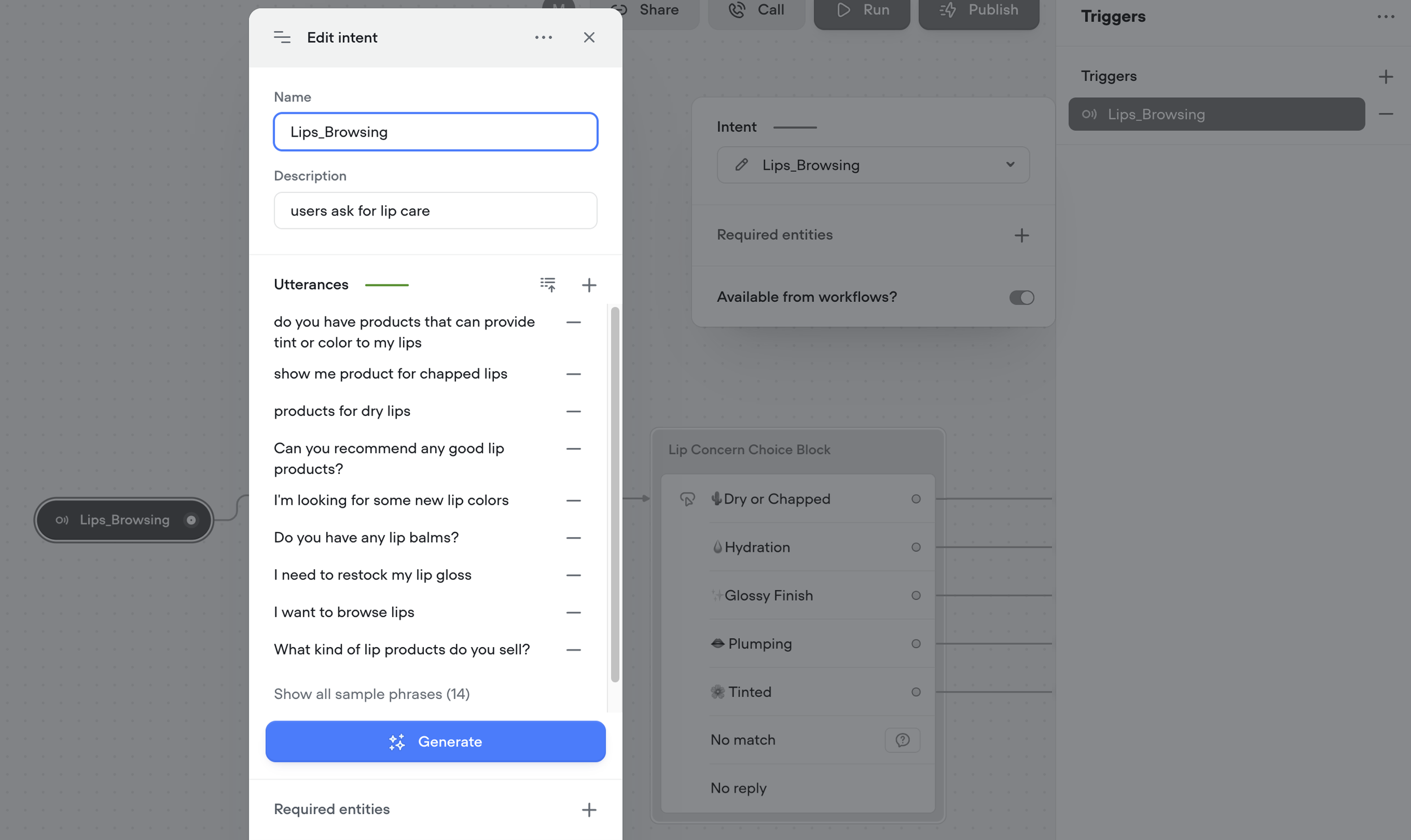
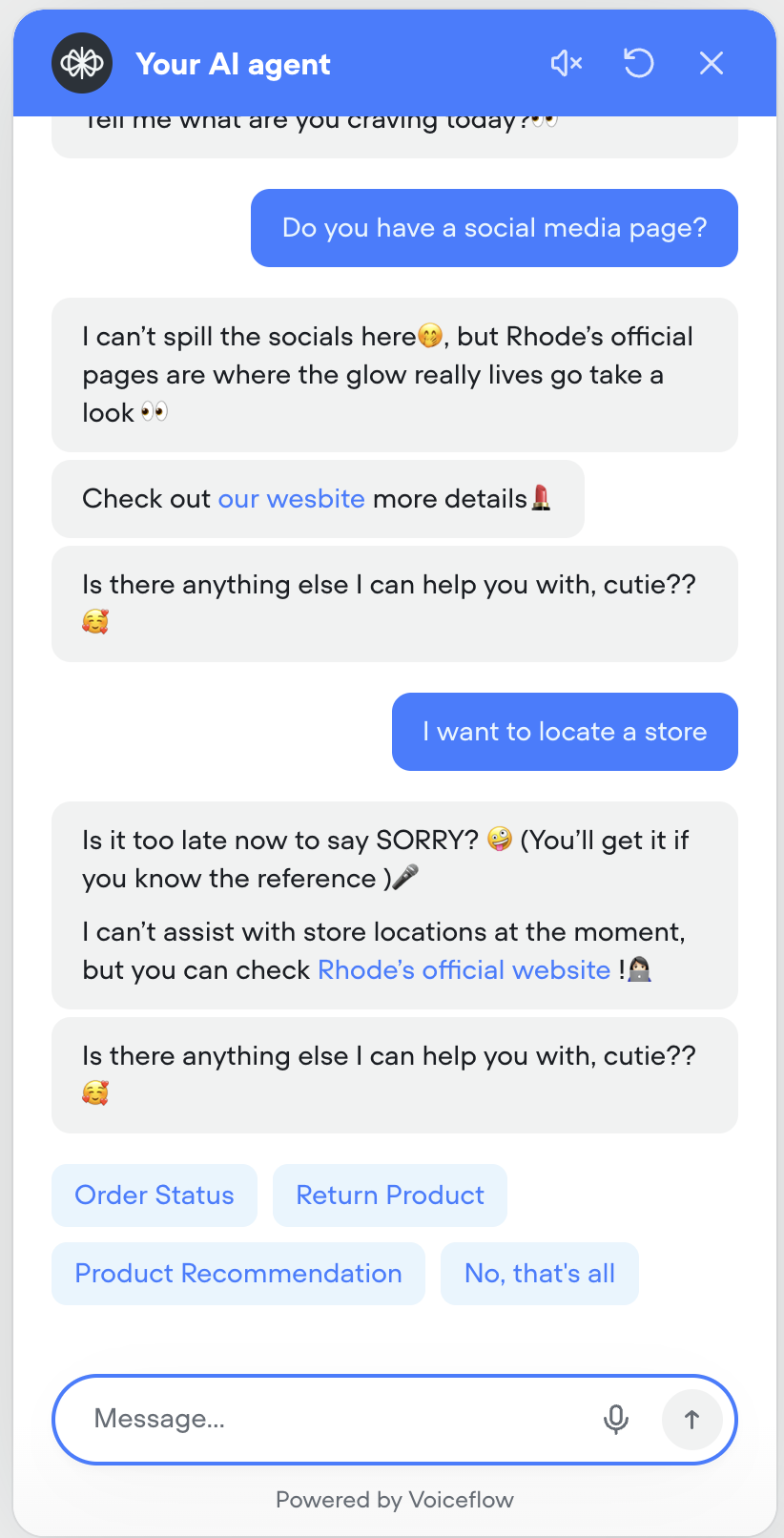
What is a non-intent?🙅♀️
Non-Intents are a designated category for user utterances that do not match any defined, specific intents, acting as a catch-all to handle out-of-scope queries
So, who is “rho”? 🤖
We named our chatbot- “rho”
A boujee Gen Z skin advisor that is warm, hypes you up, and is unapologetically playful. It uses casual language ("YASSS," "slay") while staying polished and brand-appropriate. Users should feel like they're talking to a knowledgeable friend 💌
It is conversational assistant designed to enhance the rhode shopping experience.
Guides users through product information
Delivers personalized skincare recommendations
Assists with order and return related queries
Gallery Walk 🖼️
The gallery walk was an interactive session where we shared our work and received feedback from classmates as they tested and explored our project.
Setup & Presentation
Our setup included printed conversation and task flows, wireframe sketches, task scenarios, and a live Voiceflow prototype displayed on laptops for hands-on testing. We presented key chatbot flows including the:
→ introduction
→ product recommendations for lip and skincare
→ product information & purchase
→ order status with return support
→ supporting CUI wireframes and testing scenarios.
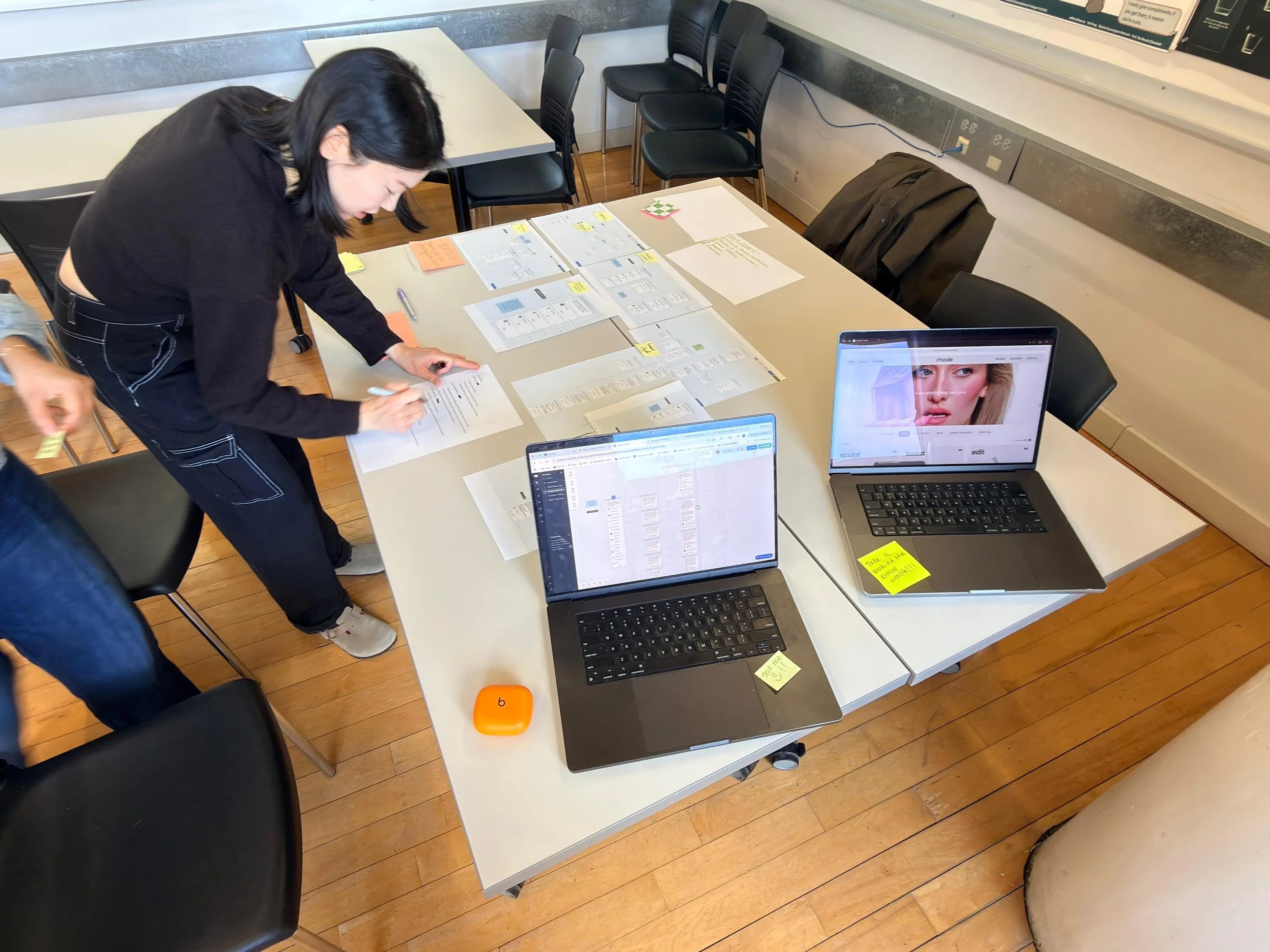
Setting up the rhode team
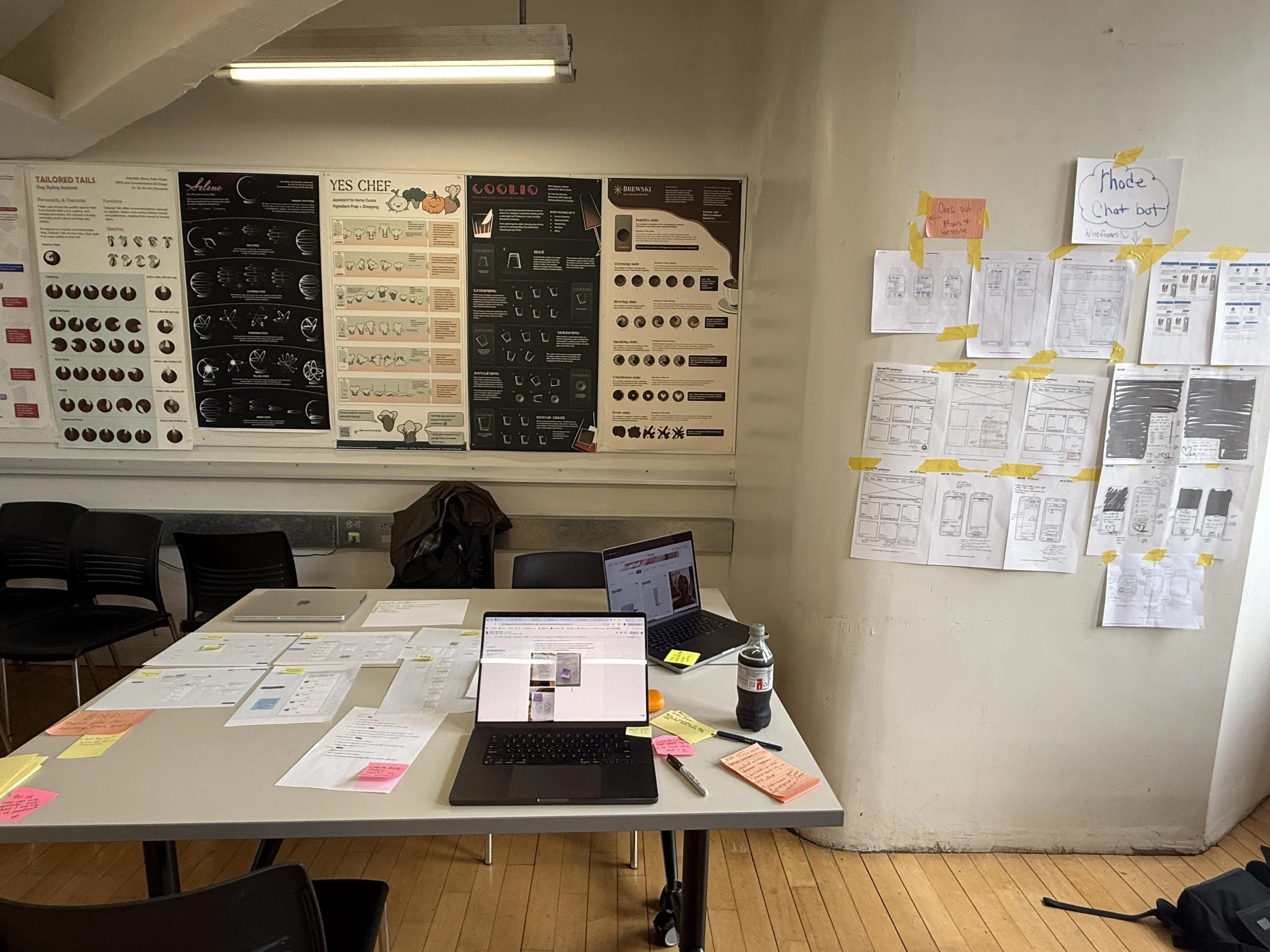
Gallery walk setup
The Results
From the gallery walk, key improvements included redesigning product recommendations with a horizontal carousel, connecting flows for a more seamless experience, and offering more curated options. We also needed to refine product descriptions, improve clarity in order and return flows, and better align the chatbot’s tone with its intended personality.
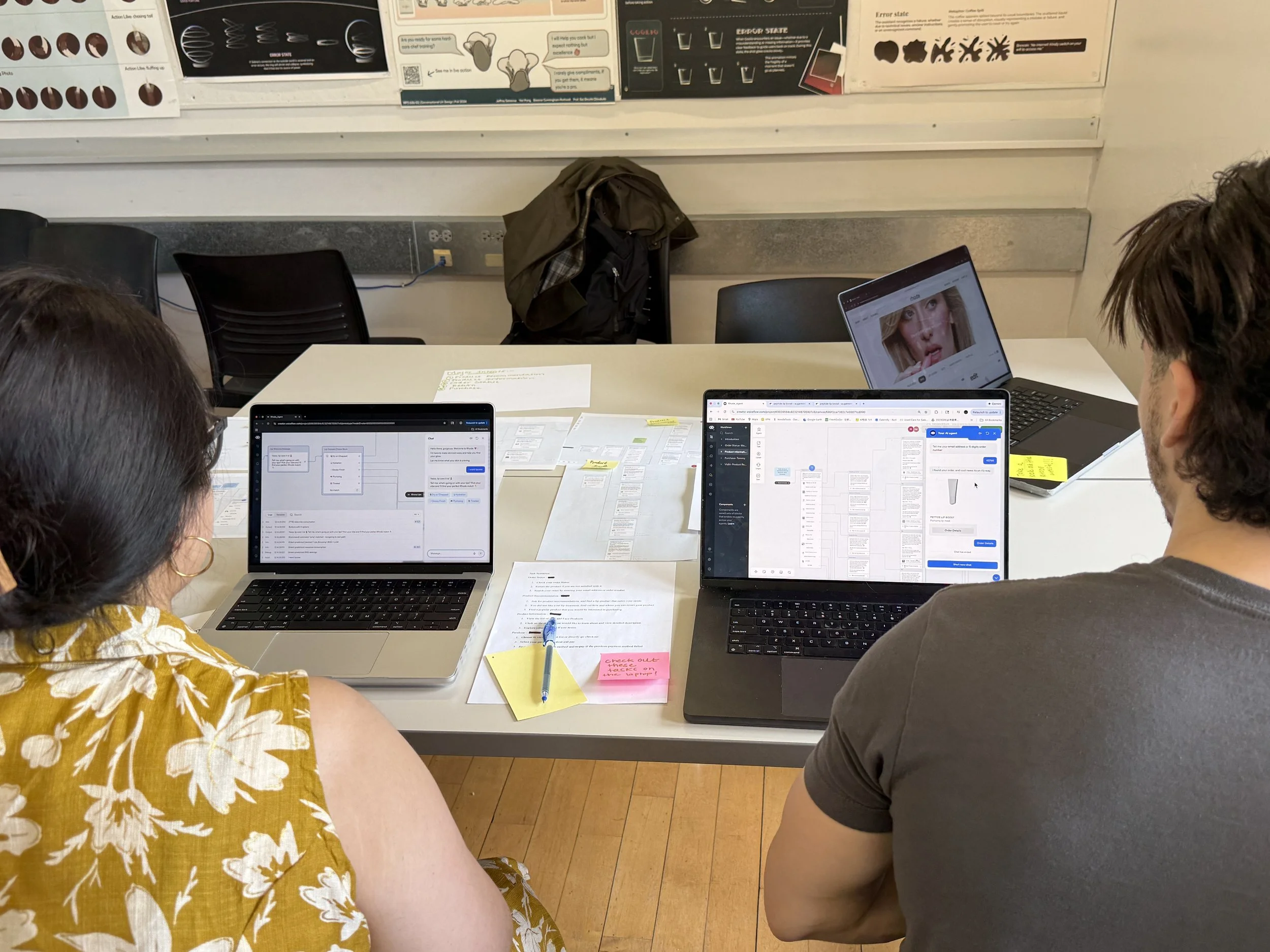
First round of testing with classmates
Key Features 🗝️
The platform lets you design dialogue flows using blocks, intents, and entities.
The agent is one main flow with component-based sub-flows for each intent. Every flow connects back into a shared closure block so the ending always feels consistent, no matter how the user got there.
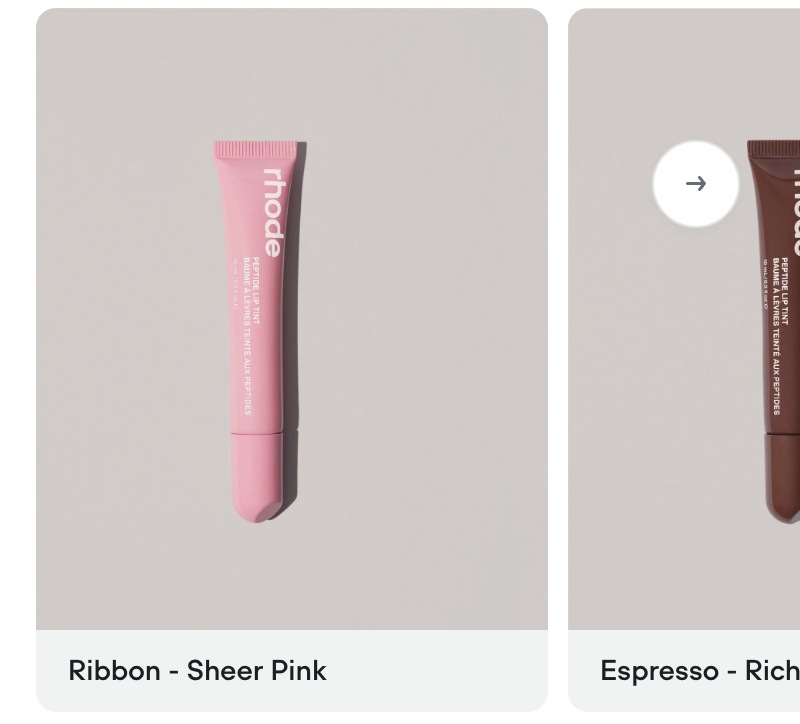
Carousel:
horizontal product browsing
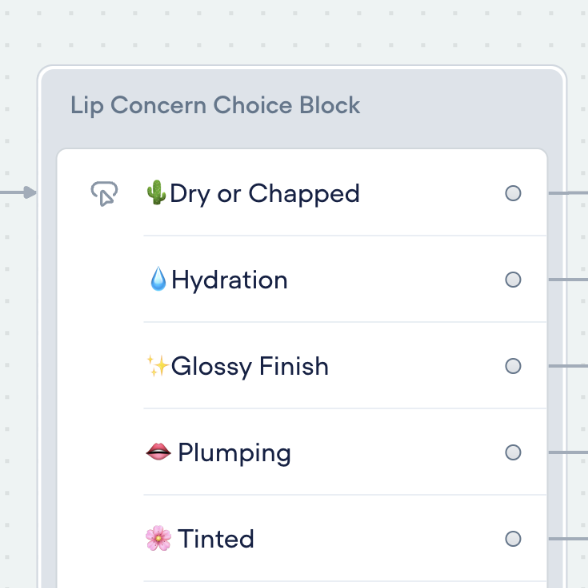
Choice Block & Buttons: guided user selection
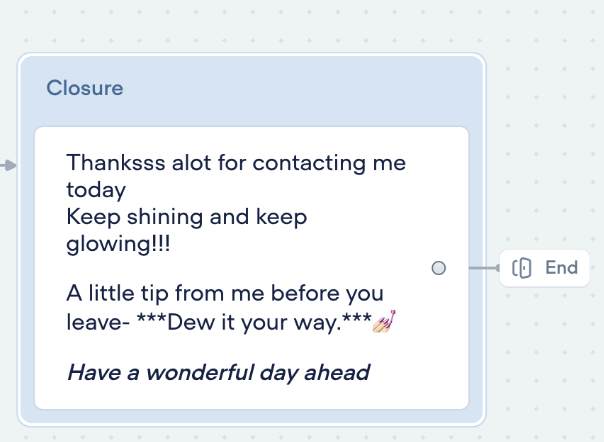
Closures:
reusable conclusion all intent flows connect into
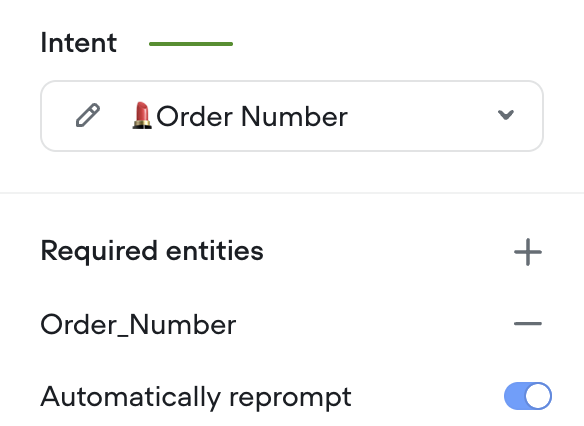
Intents & Entities:
capture order numbers
User Interactions 👩💻
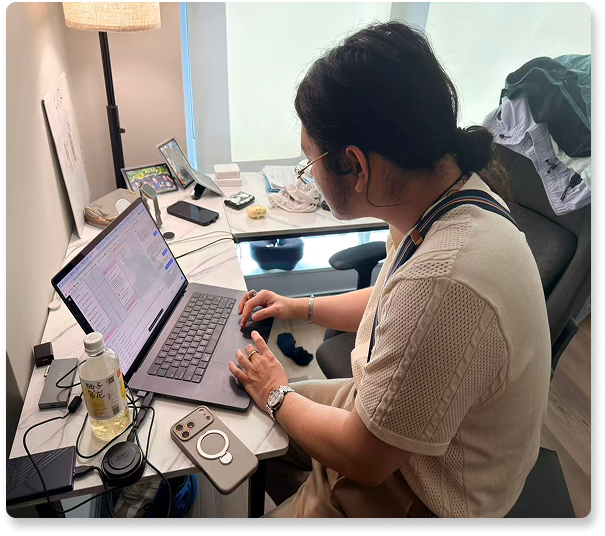
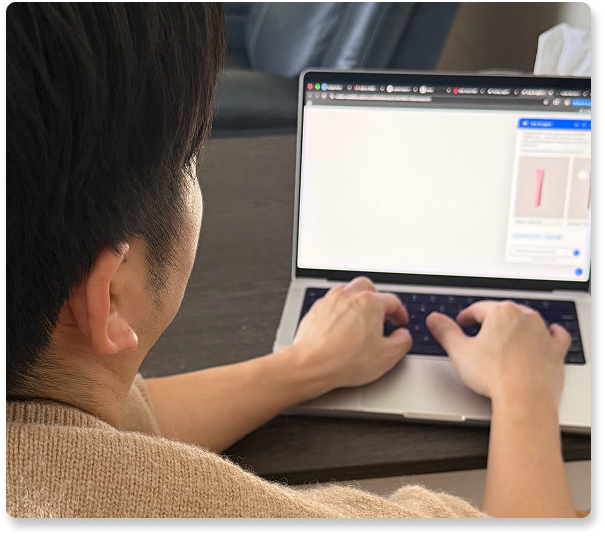
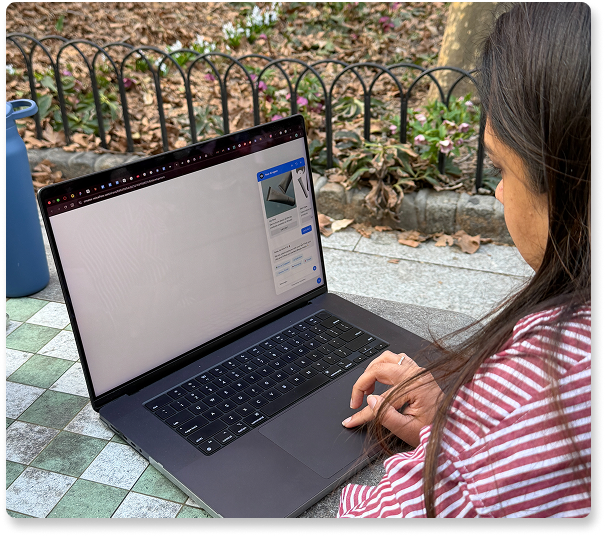
We tested on 3 different users who were not familiar with CUX to gather insights on our chat agent
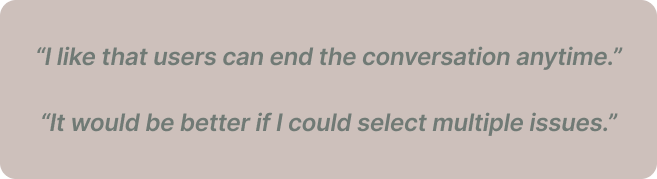
After talking to the users… we found
👀 Defining the Problem Overall:
Users found the chatbot easy to use and appreciated the ability to navigate or end conversations, but noted some unnatural responses and limited flexibility in selecting multiple concerns, leading to improvements in utterances, intents, and flow design.
📖 The Solutions:
Added a “Go Back”button for more product suggestions, support selecting multiple concerns, and
Train the agent by improving utterances and intents for clearer, more natural interactions.
CUI Footprints Wireframes 👣
Building route from task flow → Rhode voice → now wireframing by thinking of the different devices to where the agent would live based off SIX for CUI footprint
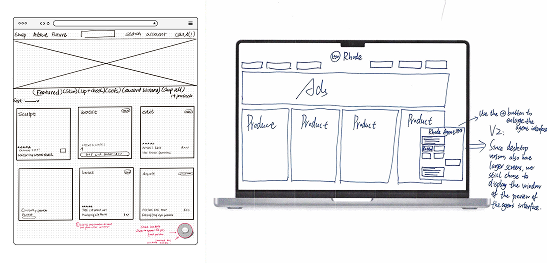
Desktop:
Agent placed in the corner as a floating button to avoid blocking the screen
S-keleton
S-pirit
S-tate
S-creen
S-ection
S-tealth
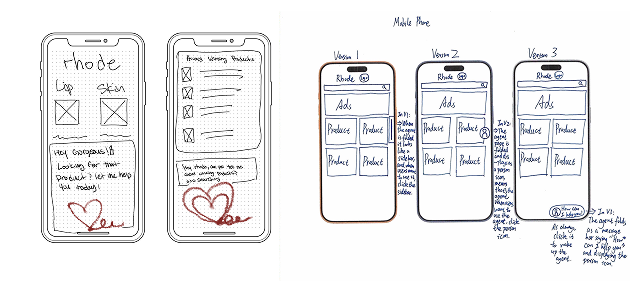
Mobile:
Agent commonly placed at bottom center with different states
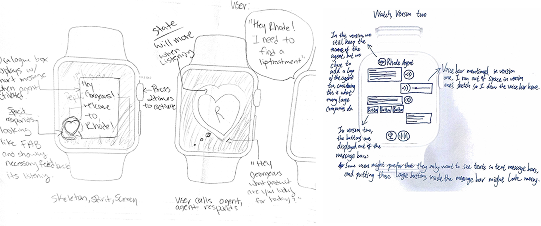
Watch:
shows one action at a time, with indicators for listening and responding
Reflections About…🪞
Conversational UX Design:
Effective CUX design focuses on the user, using a humanized agent persona to create natural interactions. This project helped us build chatbot skills by designing conversational flows that feel intuitive and reduce user effort.
Voiceflow:
While Voiceflow is a powerful tool, its limited tutorials and complex features can create challenges for non-coders. Additionally, heavy AI use can make it difficult to distinguish between automated behavior and manual controls during testing.
Only three user tests were conducted, so additional testing is needed for further iteration
&
Focus on expanding the purchase flow to support in-agent payment completion
&
Expand on the non-intents, of other functions of the site that we didn’t touch upon
Next Steps 🪜
Good-bye gorgeous ✌️
Reach back out if you need me anytime !